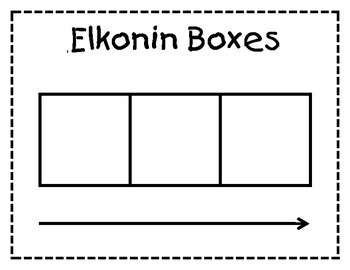
Elkonin Boxes are an effective instructional tool used to develop phonemic awareness in young children. Created by Russian psychologist D.B. Elkonin, this method helps students segment words into individual sounds (phonemes) and improve their ability to decode and encode words. Phonemic awareness is a crucial skill for young learners as it forms the foundation for successful reading and writing.
What Are Elkonin Boxes?
Elkonin Boxes are a simple, yet powerful tool used to visually represent the individual sounds in a word. These boxes are typically drawn or printed on paper, with one box for each phoneme in the word. For example, the word “cat” would be broken down into three boxes: one for the “c” sound, one for the “a” sound, and one for the “t” sound. The teacher or student places a token, marker, or dot inside each box as they say each sound aloud. This visual representation reinforces the relationship between sounds and letters, supporting children’s understanding of the phonemic structure of words.
Why Are Elkonin Boxes Important?
Phonemic awareness is an essential skill for early literacy development. It is the ability to hear, identify, and manipulate individual sounds (phonemes) in spoken words. Research has shown that phonemic awareness is one of the best predictors of future reading success. Elkonin Boxes support this skill by providing a hands-on and interactive way for children to engage with words.
When children use Elkonin Boxes, they learn to break down words into their smallest parts and understand that each sound corresponds to a letter or group of letters. This process helps them understand the concept of blending sounds together to form words, an essential skill in both reading and spelling.
How to Use Elkonin Boxes in the Classroom
Using Elkonin Boxes in the classroom can be both fun and educational. Teachers can start with simple three-phoneme words (like “cat” or “dog”) and gradually move to more complex words as students master the concept. Here’s how to use them effectively:
- Start with Simple Words: Begin with short, simple words that have three or four phonemes. For example, “bat,” “dog,” and “sun” are great starting points.
- Model the Process: Demonstrate how to break the word down into individual sounds. Say the word slowly, emphasizing each sound.
- Use Tokens or Markers: As students say each sound, have them place a marker in each corresponding box.
- Gradually Increase Complexity: As students become more proficient, move to longer words with more phonemes, including consonant blends and digraphs.
Benefits of Using Elkonin Boxes
- Improves Phonemic Awareness: Elkonin Boxes help children focus on the individual sounds in words, which is a key part of developing strong reading skills.
- Supports Spelling: As students become more adept at recognizing and segmenting sounds, their spelling skills improve.
- Hands-on Learning: This method engages students actively, making it a fun and interactive way to learn.
- Encourages Independent Learning: Once children understand how to use Elkonin Boxes, they can practice independently, reinforcing their learning.
Conclusion
Elkonin Boxes are a valuable resource for teaching phonemic awareness in early education. By helping students break down words into their individual sounds, this method strengthens their understanding of the relationship between letters and sounds, which is essential for reading and writing success. With its simple yet effective approach, Elkonin Boxes are a great tool for any educator looking to improve literacy skills in young learners.


Leave a Reply